Tube machined into the block
The tapered metering tube is drilled in a solid acrylic block, so the bore and the body are a single piece.
A clear, simple flow meter for clean service. The flow tube is part of the acrylic body, so the scale stays easy to read and the construction stays simple.
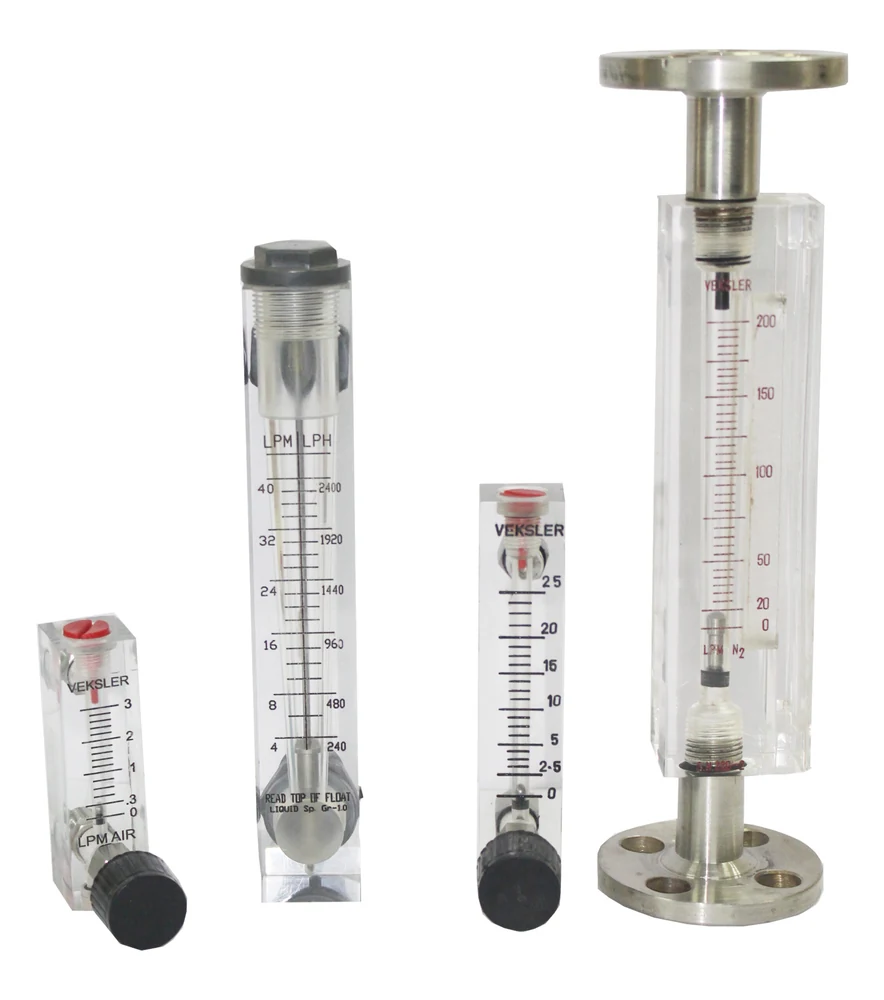
A clear, simple flow meter for clean service. The flow tube is part of the acrylic body, so the scale stays easy to read and the construction stays simple.
Two ranges are available. The low volume ABR-19 covers up to 2000 LPM for air or gas and 2 LPM for water. The high volume ABR-191 is useful for general purpose applications like water, air and inert gases, with flow ranges from 100 to 40,000 LPH for water and 0.5 to 450 m³/hr for air.
Both incorporate the features of the glass tube meters, except that they cannot be used for corrosive applications or above 60 °C.
The tapered metering tube is drilled in a solid acrylic block, so the bore and the body are a single piece.
The direct reading scale is engraved on the block itself, so it cannot shift out of register with the tube.
ABR-19 for low volume duties and ABR-191 for high volume water, air and inert gas service.
More economical than the equivalent glass tube meter where the service is clean and non-corrosive.
Two models, by volume
| Low volume model | VEKSLER (ABR-19) Low Volume Acrylic Body Rotameter |
|---|---|
| Low volume flow range | Up to 2000 LPM for air / gas and 2 LPM for water |
| High volume model | VEKSLER (ABR-191) High Volume Acrylic Body Rotameter |
| High volume flow range | 100 to 40,000 LPH for water and 0.5 to 450 m³/hr for air |
| Metering tube | Tapered tube integrally machined in the solid acrylic block |
| Scale | Direct reading, engraved on the body |
| Suitable service | General purpose, non-corrosive: water, air and inert gases |
| Max. temperature | 60 °C |
| Not suitable for | Corrosive applications, or service above 60 °C |
For corrosive service or temperatures above 60 °C, the glass tube rotameter is the correct choice. Send us your fluid and conditions and we will confirm which model suits.
Share the fluid, flow range, line size and operating conditions. We will confirm the right acrylic model and calibrate the scale in the units you use.