01
Bare probe, 2-wire
VI-HLT-1-mASS316 probe on PE wire, hydrostatic with 2-wire 4-20 mA output. The most direct arrangement where indication happens at the panel.
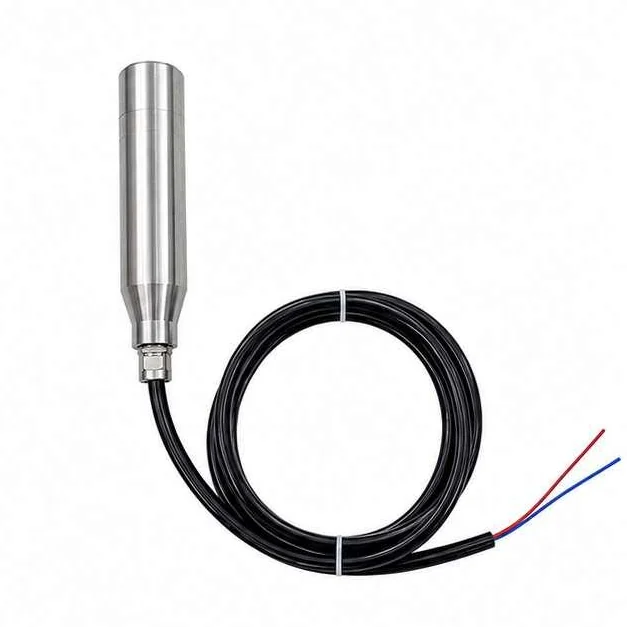
A submerged probe measures the pressure created by the liquid above it. From that pressure, the transmitter calculates level continuously, with no moving parts.
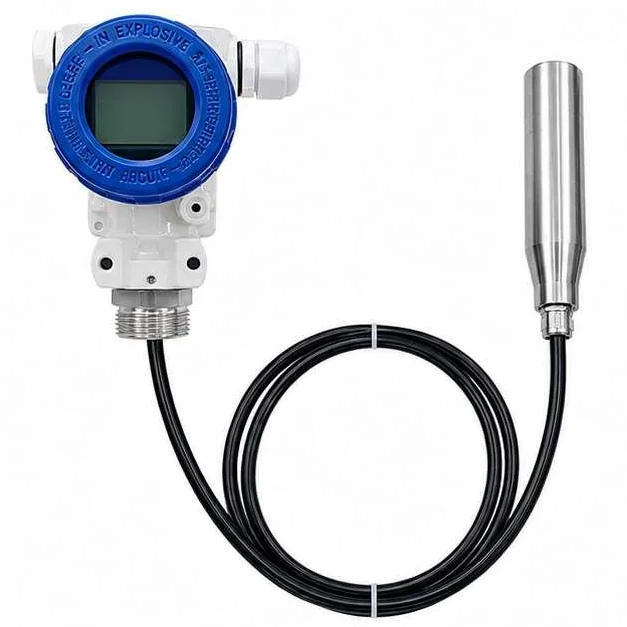
A submerged probe measures the pressure created by the liquid above it. From that pressure, the transmitter calculates level continuously, with no moving parts.
Temperature drift is less than 0.2% F.S within the 0-70 °C compensation range and less than 0.5% F.S across the allowable operating range. Solid structure with no moving parts gives high reliability and long service life.
Petroleum · chemical process · sewage treatment · water supply · environmental systems · machinery · metallurgy · electric power.
Temperature drift under 0.2% F.S within the 0-70 °C compensation range and under 0.5% F.S across the allowable operating range.
Suitable for liquids compatible with stainless steel. PVDF anti-corrosion type is available for corrosive media.
Solid structure with no moving parts, high reliability and long service life.
4-20 mA, 0-5 V, 0-10 V or RS485, with an optional FLP head display at the tank.
Applies to all variants unless otherwise specified
| Measuring range | 0-200 m |
|---|---|
| Maximum overload | 1.5 x rated pressure |
| Pressure reference | Gauge / manometer pressure |
| Accuracy grades | 0.5%; 0.2% |
| Output signal | 4-20mA; 0-5V; 0-10V; RS485 |
| Power supply | 12 to 36 VDC |
| Load resistance | ≤ 500 Ω |
| Measuring medium | Liquid |
| Long-term stability | ± 0.2% F.S / year |
| Relative humidity | 0-90% |
| Operating temperature | 0-70 °C |
| Probe material | 304; 316L; PVDF; or user-defined |
For medium temperature above 70 °C, select the capillary type. Transmitters are calibrated before leaving the factory; different mounting orientations can create a small hydrostatic offset because the sensor diaphragm is silicone-oil filled, so perform a zero-clear operation if a zero shift is observed.
Choose the probe material for the medium, the cable for the environment, and whether you need an FLP head display at the tank or a bare two-wire loop back to the panel.
SS316 probe on PE wire, hydrostatic with 2-wire 4-20 mA output. The most direct arrangement where indication happens at the panel.
SS316 probe on PE wire with a flameproof head display at the tank. 2-wire 4-20 mA output, or RS485 on the TRS code.
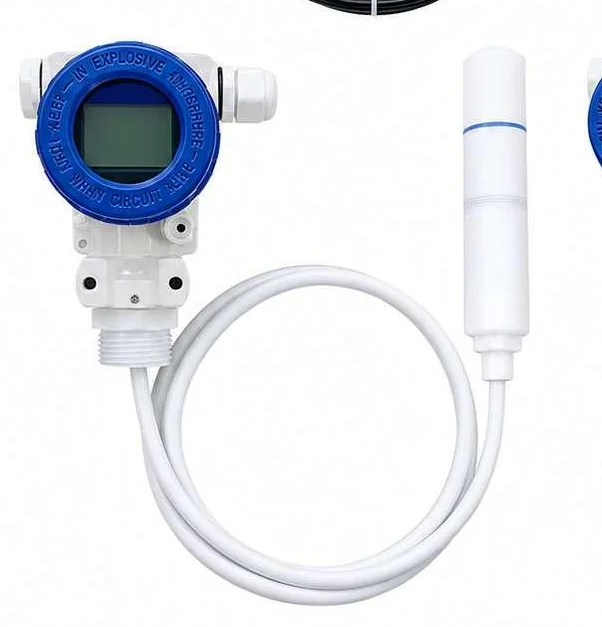
PTFE / PFA probe on PTFE wire with FLP head display, for corrosive media where stainless steel is not compatible. 4-20 mA or RS485.
SS316 probe on stainless steel wire, for deep sumps and abrasive or mechanically demanding installations. Available bare, or with FLP head display and 4-20 mA or RS485 output.
Share the measuring depth, medium, temperature, cable length and output. We will confirm the probe material, cable and configuration.