To 1950 °C
A wide range of temperature from 0 to 1950 °C, depending on the sheath material selected.
A thermocouple generates a small voltage when two dissimilar metals are joined. It is the practical choice when temperatures move beyond the useful range of most RTDs.
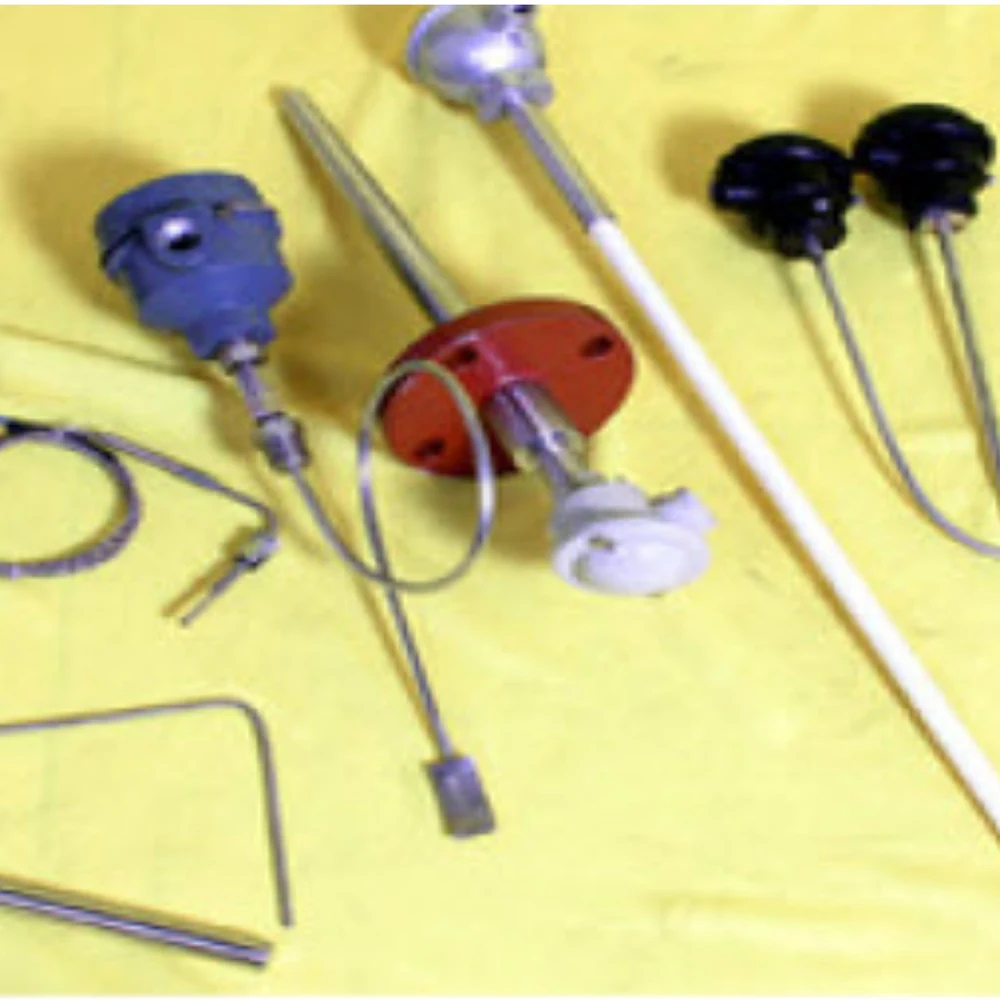
A thermocouple generates a small voltage when two dissimilar metals are joined. It is the practical choice when temperatures move beyond the useful range of most RTDs.
The diameter starts from 1.5 mm to 22 mm and more depending upon the process requirements. Sensors are supplied with or without thermowells, made from drilled bar stock or fabricated from tube or pipe with threaded or flanged connection, and with straight or tapered shank.
Where the duty falls within an RTD's range, an RTD will usually give you better accuracy and stability. Ask us which suits.
A wide range of temperature from 0 to 1950 °C, depending on the sheath material selected.
Ceramics 610 and recrystallised alumina (Ceramics 710) for the highest duties, alongside the stainless and nickel alloys.
From 1.5 mm up to 22 mm and beyond, depending on the process requirement.
Drilled bar stock or fabricated, threaded or flanged, with straight or tapered shank.
Sensors and thermowells
| Temperature range | 0 to 1950 °C |
|---|---|
| Metallurgy | SS304, SS316, SS310, SS446, Ceramics 610, recrystallised alumina (Ceramics 710), nickel, Inconel 600 or any other |
| Diameter | From 1.5 mm to 22 mm and more depending upon the process requirements |
| Thermowell | Supplied with or without. Made from drilled bar stock or fabricated from tube / pipe |
| Thermowell connection | Threaded or flanged |
| Thermowell shank | Straight or tapered |
Calibration type, sheath material, insertion length and head arrangement are set at order against your process data.
Share the temperature range, medium, insertion length and required sheath material. We will confirm the thermocouple type and construction.